
Trading isn’t just about finding the perfect strategy or spotting the next big market move. In fact, the most common reason traders fail isn’t strategy—it’s poor risk management in trading. Many beginners assume that a winning strategy guarantees profits, but without proper risk control, even the best setups can lead to losses.
Professional traders understand that longevity in the markets is far more important than chasing quick wins. The rules are simple but often overlooked.
Risk management in trading is the process of identifying, analyzing, and limiting the financial risks involved in trading. It’s more than just setting stop-losses—it’s a mindset that puts capital preservation above chasing profits. A strong risk management plan allows you to survive losing streaks and prevents emotional decisions that can derail your trading.
A study by DailyFX highlights that over 70% of retail traders fail due to poor risk practices—not lack of strategy. Even professional traders say that controlling losses is far more important than maximizing profits on individual trades.
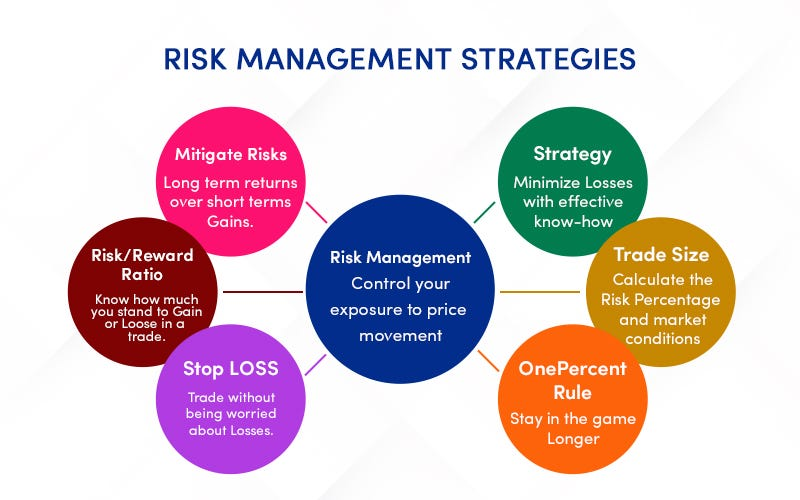
Here are the professional rules every trader should follow to manage risk effectively:
Never risk more than 1–2% of your total capital on a single trade. This ensures that even if you experience multiple consecutive losses, your account remains intact. Risking too much on one trade can wipe out months of progress in a single move.
Stop-loss orders are non-negotiable in risk management in trading. They automatically close trades if the market moves against you beyond a predetermined point. Using stop-losses prevents large losses and reduces emotional stress during volatile market conditions.
Prioritizing capital preservation over chasing profits is critical for long-term success. Focus on surviving the market and keeping your account intact. Sustainable trading grows your account steadily, allowing you to compound gains safely.
Position sizing ensures that each trade aligns with your risk tolerance. Tools like MetaTrader calculators or online position size calculators help determine the correct trade size. Many traders fail by risking too much per trade or not adjusting positions based on volatility.
A detailed trading journal is a cornerstone of risk management in trading. Track every trade, including entry, exit, risk level, and emotions. This practice helps you identify mistakes, refine your strategy, and stick to your risk rules consistently.
To further strengthen your risk control:
By integrating these advanced practices, traders not only protect capital but also improve consistency, confidence, and long-term profitability.
At Icon FX, we emphasize that sustainable trading starts with discipline. Quick wins might feel rewarding, but consistency and capital preservation build real wealth over time. Following risk management in trading principles keeps you in the game long enough to capitalize on opportunities when they arise.
Trading is a journey, not a sprint. By controlling your losses and managing your risk, you create an environment where strategies can work effectively and profits can compound.
Remember, most traders don’t fail because of a poor strategy—they fail because of weak risk control. By following the rules above, you protect your capital, reduce stress, and increase your chances of long-term success.
What’s your personal risk rule? How much do you risk per trade? Share your thoughts and join the discussion on building a disciplined trading mindset.
For more insights on trading discipline and risk management, check out our Forex Education Hub for practical guides and tutorials.
 Copyright © 2026 IconFX
 English
  Русский
  Español
  Français