Contact Us
FAQs
Start Trading
Start Trading

Master Low Liquidity Trading: 7 Expert Strategies for Profitable Holiday Forex Trading

Posted
December 12, 2025
Low liquidity trading during holidays – forex trader analyzing charts with holiday calendar overlay.

Low liquidity trading is one of the most crucial concepts for forex and CFD traders, especially during holiday periods. Fewer active participants in the market lead to wider spreads, slippage, and unpredictable price movements. Traders who understand how to approach low liquidity trading can protect their capital, avoid costly mistakes, and even find profitable opportunities during thin market conditions.

Understanding Low Liquidity Trading

Low liquidity trading occurs when market participation drops, creating thinner order books and erratic price action. During major holidays like Christmas, New Year, and national bank holidays, trading volumes plummet.

The visual below illustrates the difference between low and high liquidity.
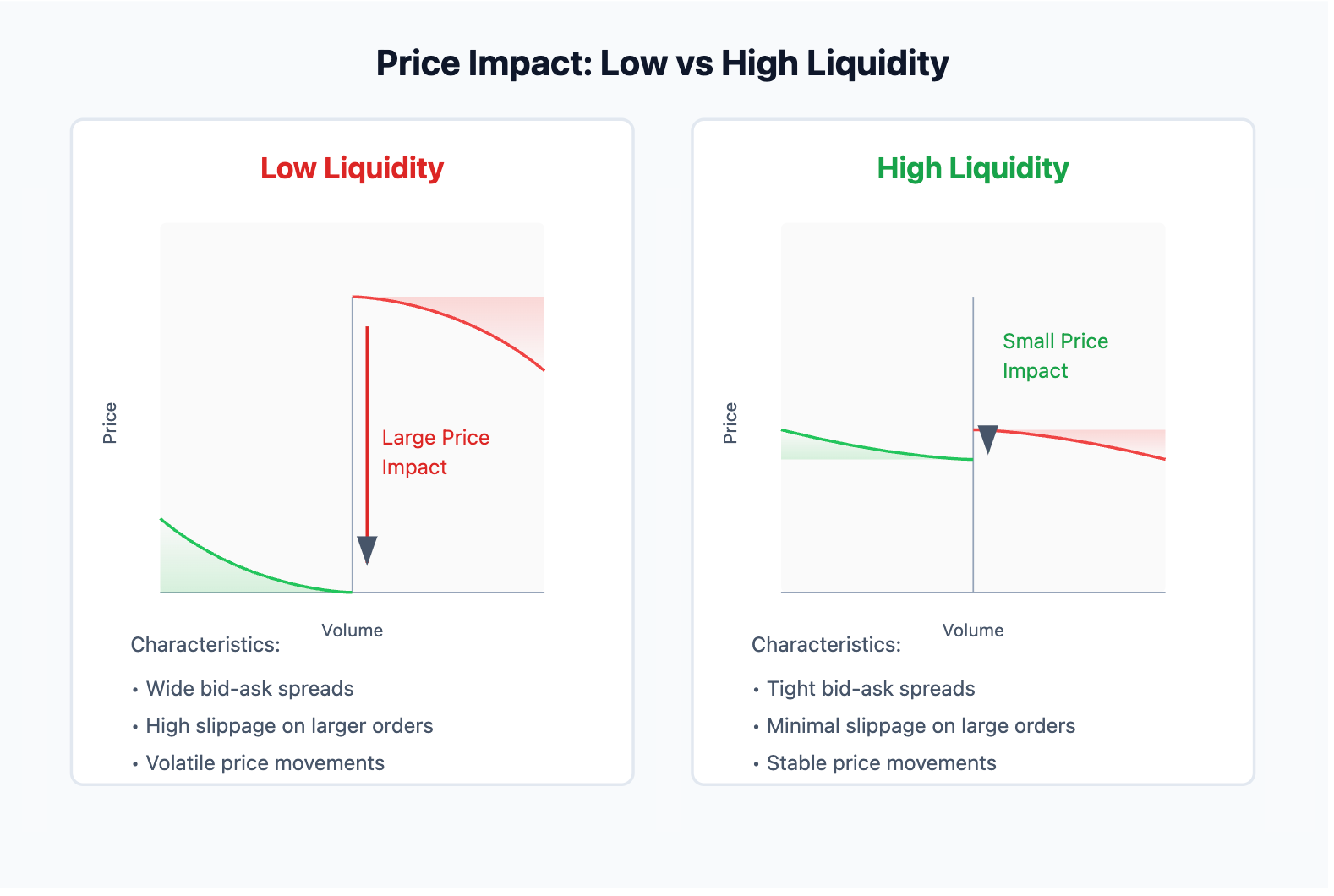
Price Imapct: Low vs. High Liquidity Trading
Image via shiftmarkets

Key Characteristics of Low-Liquidity Periods:

  • Wider Spreads: Brokers increase spreads to compensate for higher execution risk.
  • Erratic Price Movements: Thin order books allow even small orders to create large swings.
  • Increased Slippage: Orders may fill at unexpected prices due to fewer counterparties.
  • Gapping Risks: Prices may “gap” between the close of one session and the opening of the next.

Example: During the Christmas week, EUR/USD can see sudden spikes or gaps as trading volume plummets. While major pairs remain more liquid, minor and exotic currency pairs often experience extreme volatility.

Risks of Low Liquidity Trading During Holidays

Trading during low liquidity periods without proper precautions can lead to losses that outweigh potential gains. Understanding the risks is the first step toward creating effective strategies.

Key Risks Include:

  1. Wider Spreads: Higher trading costs reduce profitability.
  2. Slippage: Orders may execute at prices far from the intended entry or exit point.
  3. Erratic Volatility: Even small trades can cause sharp price movements.
  4. Gapping: Overnight gaps or gaps after holidays can lead to unexpected losses.
  5. Limited Market Signals: Technical indicators may become unreliable due to erratic price patterns.

Mini Case Study: In December 2023, GBP/USD experienced a 40-pip spike on thin trading days around Christmas, causing stop-loss orders to trigger unexpectedly. Traders who adjusted their strategies in advance mitigated losses, highlighting the importance of planning ahead.

Best Low Liquidity Trading Strategies

Navigating low liquidity requires a combination of cautious strategy, risk management, and smart timing.

1. Reduce Position Sizes: Smaller trade sizes reduce exposure to slippage and sudden price spikes. By lowering your position size, you can still participate in the market while protecting your account from unexpected volatility.

2. Avoid High-Risk Trades: Breakouts, scalping, and news-driven trades are particularly risky during holidays. Avoid trades that rely on strong momentum or high volatility signals, as these can become unpredictable in thin markets.

3. Use Limit Orders Instead of Market Orders: Market orders may execute at unfavorable prices due to low liquidity. Limit orders allow traders to control entry and exit levels, minimizing the risk of slippage.

4. Focus on Major Pairs: Pairs such as EUR/USD, USD/JPY, and GBP/USD typically retain more liquidity even during holiday periods. Minor and exotic pairs are more prone to erratic moves and should generally be avoided.

5. Trade During Overlapping Sessions: The London–New York overlap remains the most liquid window of the day, even during holidays. Trading within this period increases the chances of smoother execution and smaller spreads.

6. Consider Sitting Out: Sometimes, the best strategy is no strategy. Recognize that avoiding trades during extreme low-liquidity periods can be the safest move, preserving capital for more stable market conditions.

Tools and Indicators for Low Liquidity Trading

Using the right tools can help you identify safer trading opportunities and avoid high-risk periods.

  1. Liquidity Heatmaps: Show when market activity is highest.
  2. Volume Indicators: Track how much trading is occurring in your chosen instrument.
  3. Economic Calendars: Avoid trading around unexpected news releases that can amplify low-liquidity risks.
  4. Volatility Filters: Identify sudden price spikes and adjust trading accordingly.
  5. Trailing Stops: Protect profits while allowing flexibility in volatile conditions.

Risk Management Tips for Low Liquidity Trading

Proper risk management is critical during low-liquidity periods. Traders should implement multiple layers of protection to safeguard capital.

  • Adjust Stop-Loss Placement: Allow wider stop losses to account for erratic price swings.
  • Reduce Leverage: Lower leverage minimizes the impact of unexpected volatility.
  • Monitor Trades Closely: Thin markets require active monitoring, especially during off-peak hours.
  • Hedge Positions: Consider hedging strategies to offset potential losses.
  • Avoid Overtrading: Limit the number of trades during holiday periods to reduce cumulative risk.

Advanced Tips for Experienced Traders

  • Track Historical Liquidity Patterns: Some currency pairs show predictable liquidity drops during specific holidays. Use historical data to plan trades.
  • Use Correlated Instruments: Hedge risks by trading instruments with negative correlations.
  • Focus on Technical Levels: During low liquidity, strong support and resistance levels can be more reliable than trend-following strategies.
  • Leverage Trading Simulations: Practice holiday trading strategies on demo accounts before committing real capital.
  • Keep Trading Logs: Record all trades during holiday periods to identify patterns and refine strategies for the future.

Conclusion: Mastering Low Liquidity Trading

Trading during low-liquidity holiday periods requires careful preparation, disciplined strategy, and strong risk management. Wider spreads, slippage, and erratic price movements are unavoidable challenges, but by reducing position sizes, using limit orders, focusing on major pairs, and leveraging tools like volume indicators and liquidity heatmaps, traders can navigate these conditions safely.

Ultimately, sometimes the most profitable decision is to step back and avoid trading entirely during extreme low-liquidity periods. Planning ahead and understanding market behavior ensures that your capital is protected, and positions are executed strategically, even during the quietest market days of the year.

Ready to Start Trading?

Open an account in 3 minutes and receive your login details instantly.
Copyright © 2025 IconFX
Icon FX is a trade name of Icon Tech PTY Ltd, a limited company registered in Australia authorised and regulated by the Australian Securities & Investments Commission (ABN 94 650 709 265)

Here at Icon FX we want to expand our positive influence beyond the financial sector. That’s why when you trade with Icon FX we commit a portion of our revenue to supporting world-leading projects like Ocean-Bound Plastic Clean-up and Mangrove Tree Planting. See more info here https://verdn.com/
Risk Warning: Trading foreign exchange on margin carries significant risks, and may not be suitable for all investors. The high degree of leverage can work against you as well as for you. Before deciding to trade foreign exchange you should carefully consider your investment objectives, level of experience, and risk appetite. The possibility exists that you could sustain a loss of some or all of your initial investment and therefore you should not invest money that you cannot afford to lose. You should be aware of all the risks associated with foreign exchange trading, and seek advice from an independent financial advisor if you have any doubts. With the demo account you can test any trading strategies you wish in a risk-free environment. Please bear in mind that the results of the transactions of the practice account are virtual, and do not reflect any real profit or loss or a real trading environment, whereas market conditions may affect both the quotation and execution. A Disclosure Document is available here. Information about our services, including our fees and charges is also available at those sources.