
Low liquidity trading occurs when market participation drops, creating thinner order books and erratic price action. During major holidays like Christmas, New Year, and national bank holidays, trading volumes plummet.
The visual below illustrates the difference between low and high liquidity.
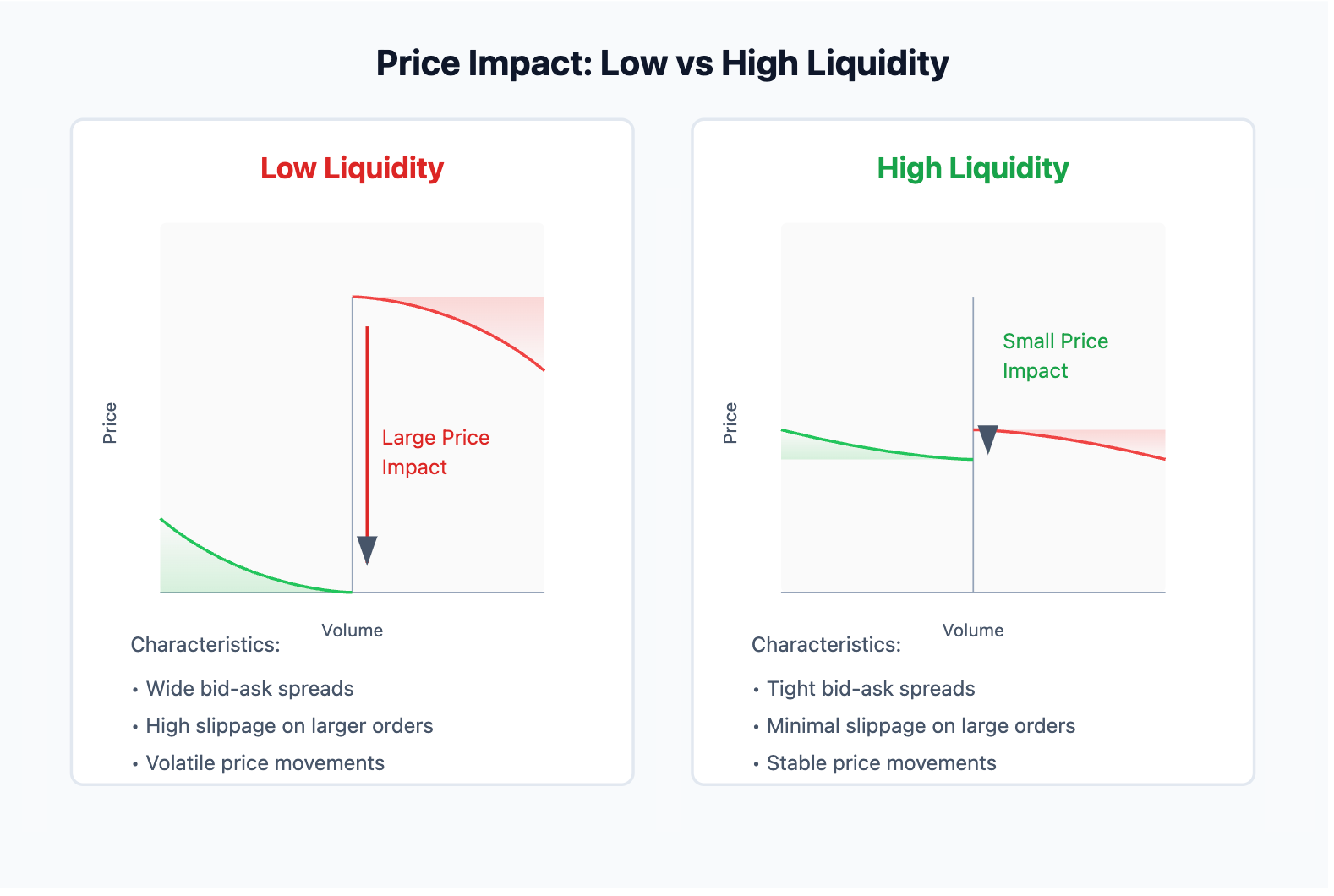
Key Characteristics of Low-Liquidity Periods:
Example: During the Christmas week, EUR/USD can see sudden spikes or gaps as trading volume plummets. While major pairs remain more liquid, minor and exotic currency pairs often experience extreme volatility.
Trading during low liquidity periods without proper precautions can lead to losses that outweigh potential gains. Understanding the risks is the first step toward creating effective strategies.
Key Risks Include:
Mini Case Study: In December 2023, GBP/USD experienced a 40-pip spike on thin trading days around Christmas, causing stop-loss orders to trigger unexpectedly. Traders who adjusted their strategies in advance mitigated losses, highlighting the importance of planning ahead.
Navigating low liquidity requires a combination of cautious strategy, risk management, and smart timing.
1. Reduce Position Sizes: Smaller trade sizes reduce exposure to slippage and sudden price spikes. By lowering your position size, you can still participate in the market while protecting your account from unexpected volatility.
2. Avoid High-Risk Trades: Breakouts, scalping, and news-driven trades are particularly risky during holidays. Avoid trades that rely on strong momentum or high volatility signals, as these can become unpredictable in thin markets.
3. Use Limit Orders Instead of Market Orders: Market orders may execute at unfavorable prices due to low liquidity. Limit orders allow traders to control entry and exit levels, minimizing the risk of slippage.
4. Focus on Major Pairs: Pairs such as EUR/USD, USD/JPY, and GBP/USD typically retain more liquidity even during holiday periods. Minor and exotic pairs are more prone to erratic moves and should generally be avoided.
5. Trade During Overlapping Sessions: The London–New York overlap remains the most liquid window of the day, even during holidays. Trading within this period increases the chances of smoother execution and smaller spreads.
6. Consider Sitting Out: Sometimes, the best strategy is no strategy. Recognize that avoiding trades during extreme low-liquidity periods can be the safest move, preserving capital for more stable market conditions.
Using the right tools can help you identify safer trading opportunities and avoid high-risk periods.
Proper risk management is critical during low-liquidity periods. Traders should implement multiple layers of protection to safeguard capital.
Trading during low-liquidity holiday periods requires careful preparation, disciplined strategy, and strong risk management. Wider spreads, slippage, and erratic price movements are unavoidable challenges, but by reducing position sizes, using limit orders, focusing on major pairs, and leveraging tools like volume indicators and liquidity heatmaps, traders can navigate these conditions safely.
Ultimately, sometimes the most profitable decision is to step back and avoid trading entirely during extreme low-liquidity periods. Planning ahead and understanding market behavior ensures that your capital is protected, and positions are executed strategically, even during the quietest market days of the year.
 Copyright © 2026 IconFX
 Español
  English
  Русский
  Français