КОНТАКТЫ
ЧаВо
Начать Торговать
Начать Торговать

Master Low Liquidity Trading: 7 Expert Strategies for Profitable Holiday Forex Trading

Posted
Декабрь 12, 2025
Low liquidity trading during holidays – forex trader analyzing charts with holiday calendar overlay.

Understanding Low Liquidity Trading

Low liquidity trading occurs when market participation drops, creating thinner order books and erratic price action. During major holidays like Christmas, New Year, and national bank holidays, trading volumes plummet.

The visual below illustrates the difference between low and high liquidity.
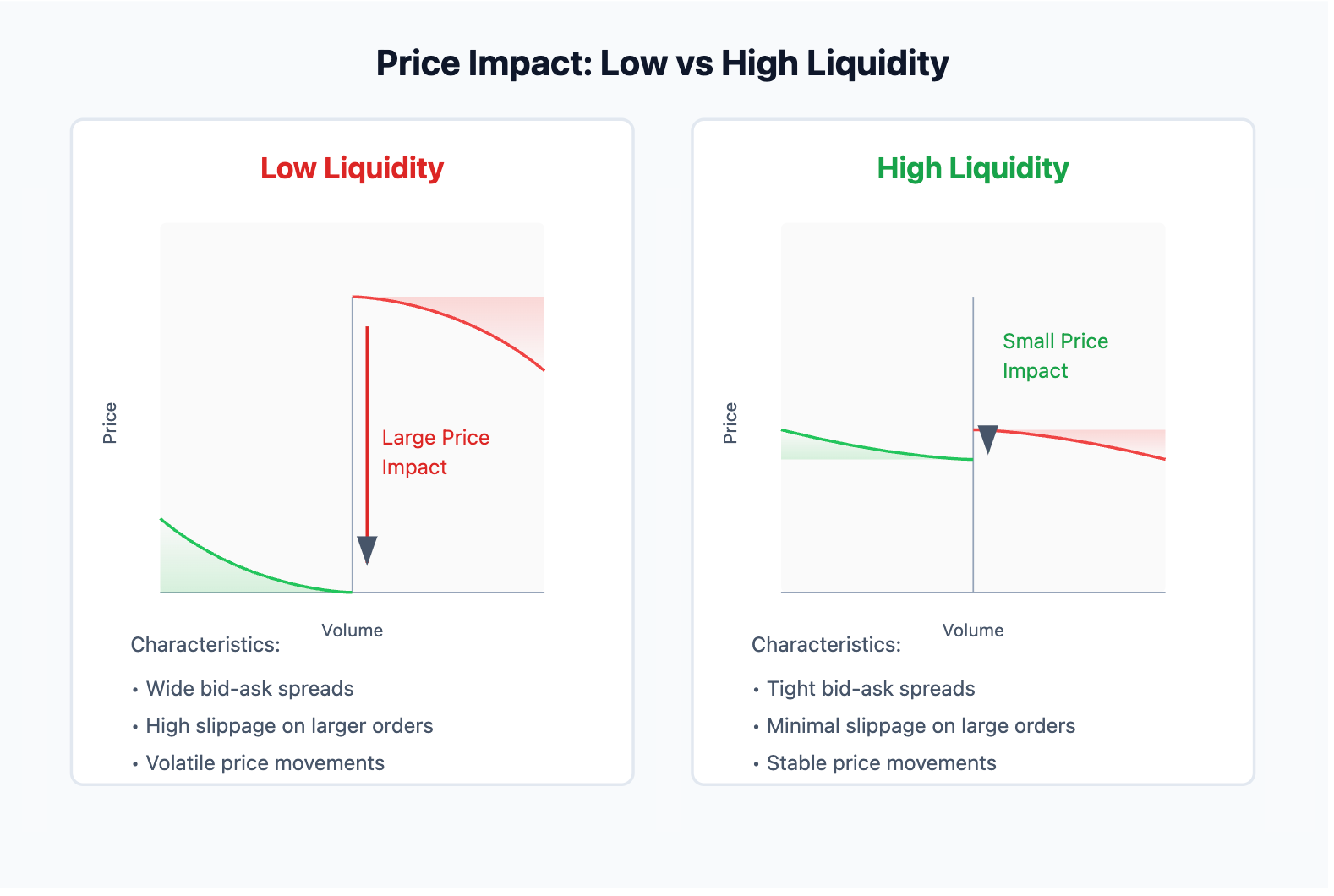
Price Imapct: Low vs. High Liquidity Trading
Image via shiftmarkets

Key Characteristics of Low-Liquidity Periods:

  • Wider Spreads: Brokers increase spreads to compensate for higher execution risk.
  • Erratic Price Movements: Thin order books allow even small orders to create large swings.
  • Increased Slippage: Orders may fill at unexpected prices due to fewer counterparties.
  • Gapping Risks: Prices may “gap” between the close of one session and the opening of the next.

Example: During the Christmas week, EUR/USD can see sudden spikes or gaps as trading volume plummets. While major pairs remain more liquid, minor and exotic currency pairs often experience extreme volatility.

Risks of Low Liquidity Trading During Holidays

Trading during low liquidity periods without proper precautions can lead to losses that outweigh potential gains. Understanding the risks is the first step toward creating effective strategies.

Key Risks Include:

  1. Wider Spreads: Higher trading costs reduce profitability.
  2. Slippage: Orders may execute at prices far from the intended entry or exit point.
  3. Erratic Volatility: Even small trades can cause sharp price movements.
  4. Gapping: Overnight gaps or gaps after holidays can lead to unexpected losses.
  5. Limited Market Signals: Technical indicators may become unreliable due to erratic price patterns.

Mini Case Study: In December 2023, GBP/USD experienced a 40-pip spike on thin trading days around Christmas, causing stop-loss orders to trigger unexpectedly. Traders who adjusted their strategies in advance mitigated losses, highlighting the importance of planning ahead.

Best Low Liquidity Trading Strategies

Navigating low liquidity requires a combination of cautious strategy, risk management, and smart timing.

1. Reduce Position Sizes: Smaller trade sizes reduce exposure to slippage and sudden price spikes. By lowering your position size, you can still participate in the market while protecting your account from unexpected volatility.

2. Avoid High-Risk Trades: Breakouts, scalping, and news-driven trades are particularly risky during holidays. Avoid trades that rely on strong momentum or high volatility signals, as these can become unpredictable in thin markets.

3. Use Limit Orders Instead of Market Orders: Market orders may execute at unfavorable prices due to low liquidity. Limit orders allow traders to control entry and exit levels, minimizing the risk of slippage.

4. Focus on Major Pairs: Pairs such as EUR/USD, USD/JPY, and GBP/USD typically retain more liquidity even during holiday periods. Minor and exotic pairs are more prone to erratic moves and should generally be avoided.

5. Trade During Overlapping Sessions: The London–New York overlap remains the most liquid window of the day, even during holidays. Trading within this period increases the chances of smoother execution and smaller spreads.

6. Consider Sitting Out: Sometimes, the best strategy is no strategy. Recognize that avoiding trades during extreme low-liquidity periods can be the safest move, preserving capital for more stable market conditions.

Tools and Indicators for Low Liquidity Trading

Using the right tools can help you identify safer trading opportunities and avoid high-risk periods.

  1. Liquidity Heatmaps: Show when market activity is highest.
  2. Volume Indicators: Track how much trading is occurring in your chosen instrument.
  3. Economic Calendars: Avoid trading around unexpected news releases that can amplify low-liquidity risks.
  4. Volatility Filters: Identify sudden price spikes and adjust trading accordingly.
  5. Trailing Stops: Protect profits while allowing flexibility in volatile conditions.

Risk Management Tips for Low Liquidity Trading

Proper risk management is critical during low-liquidity periods. Traders should implement multiple layers of protection to safeguard capital.

  • Adjust Stop-Loss Placement: Allow wider stop losses to account for erratic price swings.
  • Reduce Leverage: Lower leverage minimizes the impact of unexpected volatility.
  • Monitor Trades Closely: Thin markets require active monitoring, especially during off-peak hours.
  • Hedge Positions: Consider hedging strategies to offset potential losses.
  • Avoid Overtrading: Limit the number of trades during holiday periods to reduce cumulative risk.

Advanced Tips for Experienced Traders

  • Track Historical Liquidity Patterns: Some currency pairs show predictable liquidity drops during specific holidays. Use historical data to plan trades.
  • Use Correlated Instruments: Hedge risks by trading instruments with negative correlations.
  • Focus on Technical Levels: During low liquidity, strong support and resistance levels can be more reliable than trend-following strategies.
  • Leverage Trading Simulations: Practice holiday trading strategies on demo accounts before committing real capital.
  • Keep Trading Logs: Record all trades during holiday periods to identify patterns and refine strategies for the future.

Conclusion: Mastering Low Liquidity Trading

Trading during low-liquidity holiday periods requires careful preparation, disciplined strategy, and strong risk management. Wider spreads, slippage, and erratic price movements are unavoidable challenges, but by reducing position sizes, using limit orders, focusing on major pairs, and leveraging tools like volume indicators and liquidity heatmaps, traders can navigate these conditions safely.

Ultimately, sometimes the most profitable decision is to step back and avoid trading entirely during extreme low-liquidity periods. Planning ahead and understanding market behavior ensures that your capital is protected, and positions are executed strategically, even during the quietest market days of the year.

Готовы начать торговать?

Откройте счет за 3 минуты и мгновенно получите данные для входа.
Copyright © 2025 IconFX
Icon FX is a trade name of Icon Tech PTY Ltd, a limited company registered in Australia authorised and regulated by the Australian Securities & Investments Commission (ABN 94 650 709 265)

В Icon FX мы хотим расширить наше положительное влияние за пределы финансового сектора. Именно поэтому, когда вы торгуете с Icon FX мы направляем часть нашей выручки на поддержку ведущих мировых проектов, таких как очистка океана от пластика и посадка мангровых деревьев. Подробнее здесь.
Предупреждение о рисках: Торговля иностранной валютой с использованием маржи сопряжена со значительными рисками и может подойти не всем инвесторам. Высокий уровень кредитного плеча может работать как на вас, так и против вас. Прежде чем принять решение о торговле иностранной валютой, тщательно продумайте свои инвестиционные цели, уровень опыта и готовность к риску. Существует вероятность потери части или всех первоначальных инвестиций, поэтому не следует инвестировать средства, которые вы не можете позволить себе потерять. Вам следует осознавать все риски, связанные с торговлей иностранной валютой, и в случае сомнений обратиться за консультацией к независимому финансовому консультанту. Демо-счет позволяет протестировать любые торговые стратегии в безрисковой среде. Пожалуйста, имейте в виду, что результаты транзакций на демо-счете являются виртуальными и не отражают реальную прибыль или убыток, а также реальную торговую среду, в то время как рыночные условия могут влиять как на котировки, так и на исполнение. С документом о раскрытии информации можно ознакомиться здесь. Информация о наших услугах, включая комиссии и сборы, также доступна на этих ресурсах.