Earn commissions from every active trader you refer.
Final outlook: US Dollar Spiked Toward 99.00
The outlook depends heavily on geopolitical developments:
If tensions escalate → USD strengthens further
If tensions ease → USD may retrace
If oil stays elevated → USD remains supported
For now, the US Dollar Spiked Toward 99.00 move confirms that fear and uncertainty are back in control of FX markets.
Final takeaway
The US Dollar Spiked Toward 99.00 is not just a technical breakout — it is a macro-driven liquidity shift.
Traders should expect continued volatility, fast reversals, and headline-driven price action.
Forex Inflation Trading 2026: 5 Powerful Opportunities After Inflation Spike
Table of Contents
Forex Inflation Trading 2026: What Traders Need to Know Right Now
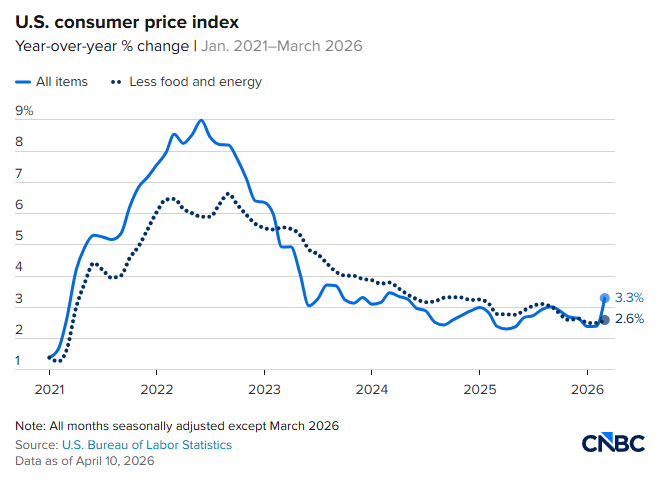
Forex inflation trading 2026 is quickly becoming one of the most important themes in global markets. Inflation has recently recorded its largest gain since mid-2022, and traders are now adjusting to a market environment driven by volatility, uncertainty, and rapid price shifts.
If you’re trading forex right now, this is not just another data point — this is a potential market-moving trend that could define the next few months.
Why Inflation Is Rising Again
The current rise in inflation is largely being driven by energy prices, especially oil. Ongoing geopolitical tensions, particularly involving Iran and key supply routes, have pushed oil prices higher.
As energy costs rise, they directly impact:
Transportation
Food production
Manufacturing costs
This creates a ripple effect across the entire economy.
To track official inflation data, traders rely on sources like the U.S. Bureau of Labor Statistics.
At the same time, market participants are closely watching how central banks respond — especially the Federal Reserve.
Because their next move could either stabilize markets… or increase volatility even further.
How Forex Inflation Trading 2026 Impacts the Market
In forex inflation trading 2026, inflation directly influences interest rate expectations — and that’s what drives currencies.
Here’s the simplified dynamic:
Rising inflation → central banks delay rate cuts
Higher interest rates → can strengthen a currency
But uncertainty → creates unstable, volatile price action
This is why the market right now feels unpredictable. Instead of clean trends, traders are seeing sharp moves followed by reversals.
For beginners, this environment can feel confusing. But for experienced traders, this is where opportunities increase.
5 Powerful Opportunities in Forex Inflation Trading 2026
1. Volatility Trading Is Back
One of the biggest advantages of forex inflation trading 2026 is volatility.
When inflation surprises the market, price movements become more aggressive. This creates ideal conditions for:
Scalping
Intraday trading
Breakout strategies
2. Oil Is Driving Currency Moves Again
Oil is once again a major factor in currency movements.
Currencies tied to commodities are reacting strongly, especially:
USD/CAD
AUD/USD
As oil rises, these pairs can experience significant momentum, making them key targets for traders.
3. Interest Rate Expectations Are Shifting Fast
Markets are constantly adjusting expectations around interest rates.
Even small changes in inflation data can cause:
Sharp USD moves
Sudden reversals
Increased uncertainty
This makes news-based trading more important than ever in forex inflation trading 2026.
4. Safe Haven Demand Is Increasing
Geopolitical tensions and rising inflation are pushing traders toward safer assets.
This impacts currencies like:
USD
JPY
Pairs like USD/JPY are becoming more sensitive to both inflation data and global risk sentiment.
5. CPI Events Are Market Movers Again
We are seeing something not observed since 2022:
CPI releases are driving major market reactions again
This means every inflation report is now a potential trading opportunity — not just a background event.
Key Pairs to Watch in Forex Inflation Trading 2026
If you’re actively trading, these pairs should be on your radar:
EUR/USD → reacting to USD strength and policy expectations
USD/JPY → driven by yields and risk sentiment
AUD/USD → tied to commodities and global growth outlook
These pairs are showing the clearest reactions to inflation-driven volatility.
External Resources for Traders
To stay updated, consider following:
U.S. Bureau of Labor Statistics
Federal Reserve
These are essential for anyone serious about forex inflation trading 2026.
Final Thoughts: Is This the Biggest Opportunity Since 2022?
Forex inflation trading 2026 may be entering a phase we haven’t seen since June 2022:
Rising inflation
Strong geopolitical influence
Uncertain central bank decisions
This combination creates one thing traders look for:
"Opportunity"
The key question now is:
Will inflation keep rising… or is this just a temporary spike driven by oil?
Because the answer will determine the next major trend in forex markets.
Your Next Move Starts Here
You have two choices:
Watch the market move without you
Step in and take advantage of it
Forex inflation trading 2026 is already creating opportunities — the question is whether you’ll act on them.
Q2 2026 Forex Outlook: 7 Powerful Winning Trends Every Trader Must Watch | Icon FX
Q2 2026 Forex Outlook: Key Trends Traders Should Watch
The Q2 2026 Forex Outlook signals a highly dynamic trading environment driven by economic shifts, central bank decisions, and geopolitical developments. As global markets adjust to changing macroeconomic conditions, forex traders must stay informed and agile.
Understanding the Q2 2026 Forex Outlook is essential for identifying profitable opportunities while managing downside risks. With inflation trends stabilizing in some regions and persisting in others, currency markets are expected to react sharply to new data releases.
At Icon FX, we help traders navigate these complex conditions with real-time insights, advanced tools, and strategic guidance tailored for modern forex markets.
Table of Contents
1. Central Bank Policy Divergence in Q2 2026 Forex Outlook
One of the most influential drivers in the Q2 2026 Forex Outlook is the divergence in global monetary policies. The US Federal Reserve is likely to maintain relatively higher interest rates, while other central banks, such as the European Central Bank and Bank of England, may begin easing policies to support growth.
This divergence creates strong directional trends in major currency pairs like EUR/USD and GBP/USD. Traders should pay close attention to central bank statements, meeting minutes, and forward guidance, as these can significantly influence market sentiment and price action.
2. USD Strength vs Emerging Market Volatility
The forex outlook in Q2 2026 suggests continued strength in the US dollar, driven by economic resilience and interest rate advantages.
However, emerging market currencies may face pressure due to capital outflows and global uncertainty—creating trading opportunities in pairs like USD/ZAR and USD/TRY.
3. Inflation & Interest Rate Shifts
Inflation remains a dominant force in the Q2 2026 Forex Outlook. A faster-than-expected decline in inflation could trigger earlier rate cuts, weakening certain currencies.
Traders should monitor CPI releases and central bank commentary closely to anticipate market movements.
4. Geopolitical Risks Driving Safe Haven Demand
Geopolitical tensions can significantly impact forex markets. In the Q2 2026 Forex Outlook, uncertainty may drive demand for safe-haven currencies such as:
Japanese Yen (JPY)
Swiss Franc (CHF)
These assets often surge during global instability.
5. Commodity Currency Trends to Watch
Commodity-linked currencies like AUD, CAD, and NZD are expected to remain highly sensitive to:
Oil price fluctuations
Metal demand
Global trade conditions
The Q2 2026 Forex Outlook highlights commodities as a key leading indicator for forex traders.
6. Rise of Algorithmic & AI Trading
Algorithmic trading continues to transform the forex market. In the Q2 2026 Forex Outlook, increased automation leads to:
Faster price movements
Increased liquidity
Shorter trade cycles
Using advanced platforms like Icon FX, traders can leverage data-driven tools to stay competitive.
The Q2 2026 forex outlook presents a high-impact trading environment shaped by economic shifts, policy divergence, and global uncertainty.
Traders who stay informed, adapt strategies, and leverage tools from Icon FX will be best positioned to capitalize on emerging opportunities.
U.S. Nonfarm Payrolls Jump to 178K, Largest Gain Since December 2024 as Unemployment Falls
Table of Contents
Overview
The March 2026 NFP Results delivered a powerful upside surprise, reinforcing confidence in the U.S. labor market at a time when expectations were relatively low.
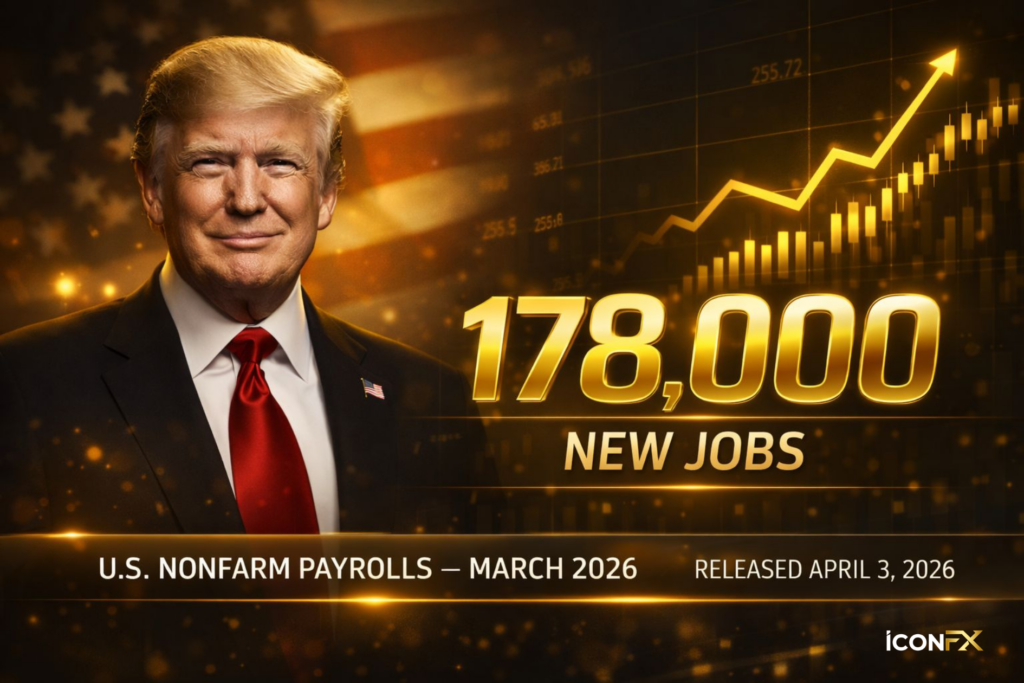
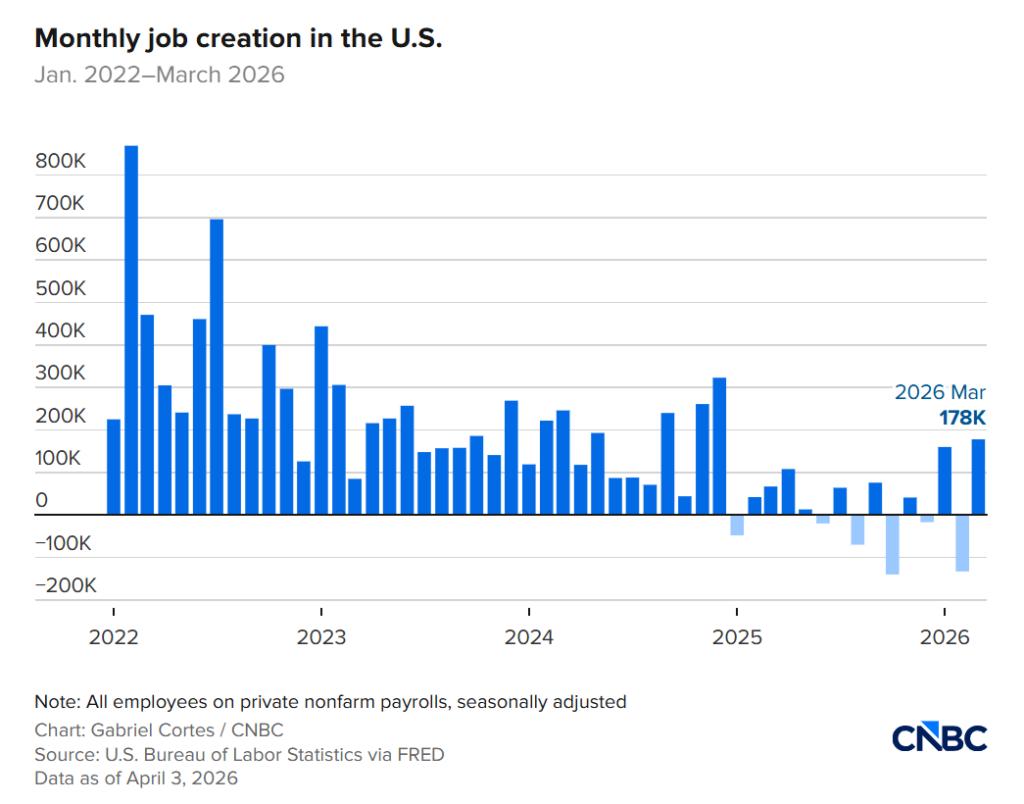
U.S. nonfarm payrolls increased by 178,000 jobs in March, marking the largest gain since December 2024 and significantly beating forecasts of around 60,000. At the same time, the unemployment rate dropped to 4.3%, highlighting continued resilience in employment conditions.
According to FXStreet, markets were positioned for a weaker report. This made the March 2026 NFP Results particularly impactful, triggering strong reactions across financial markets.
For both traders and everyday readers, the March 2026 NFP Results send a clear message: the U.S. economy is holding steady despite global uncertainty and recent concerns about slowing growth.
Why March 2026 NFP Results Matter
The job data are more than just economic data—they directly affect daily life and financial decisions.
Employment opportunities: Strong job growth suggests continued hiring
Interest rates: A resilient labor market may delay Federal Reserve rate cuts
Cost of living: Wage trends influence inflation and purchasing power
For traders, the March 2026 NFP Results are one of the most important monthly indicators. They often drive sharp movements in forex pairs, gold, and equity markets within minutes of release.
In simple terms, the March 2026 NFP Results help determine how strong the economy is and where markets might move next.
Key Data
Here are the most important figures from the March 2026 NFP Results:
+178,000 jobs added (vs ~60,000 expected)
Largest gain since December 2024
Unemployment rate: 4.3% (down from 4.4%)
Wage growth: ~3.5% YoY (moderating)
Labor force participation: 61.9%
While the headline numbers are strong, the March 2026 NFP Results were partly supported by temporary rebounds in sectors such as healthcare and construction, which had previously been affected by disruptions.
This means that while the data is encouraging, it may not fully reflect long-term momentum.
Market Reaction
The March 2026 NFP Results triggered immediate and noticeable reactions across global financial markets:
US Dollar (USD): Strengthened as traders priced in a stronger economy
Gold: Declined as safe-haven demand weakened
Bond yields: Rose as expectations for interest rate cuts were reduced
For traders, strong March 2026 NFP Results typically signal:
Short-term USD bullish momentum
Increased volatility in major forex pairs like EUR/USD
Lower probability of near-term Federal Reserve easing
Despite the strong headline, the job data reveal a more nuanced economic situation.
Hiring remains uneven across sectors
Wage growth is gradually cooling
Worker confidence is still cautious
Economists often describe this as a “low-hire, low-fire” environment, where companies are not aggressively hiring but also not laying off workers.
This suggests that the labor market is stable—but not accelerating rapidly.
The results therefore reflect a balancing act: strong enough to support the economy, but not strong enough to signal overheating.
Outlook After March 2026 NFP Results
The March 2026 NFP Results will play a critical role in shaping Federal Reserve policy and market expectations in the coming months.
Key factors to watch:
Upcoming inflation data
Energy and oil price trends
Future labor market reports
If strong job growth continues, the Fed may delay interest rate cuts, supporting the US dollar. However, if the momentum fades, markets could quickly shift toward expecting monetary easing.
For traders, the March 2026 NFP Results highlight the importance of staying data-driven and prepared for volatility.
Final Takeaway
The March 2026 NFP Results deliver a clear and impactful message:
The U.S. job market remains stronger than expected.
With 178K jobs added—the largest gain since December 2024— and unemployment falling, the data supports a resilient economy.
However, underlying trends suggest caution is still needed.
For traders, the March 2026 NFP results present opportunity, volatility, and key signals for future market direction. For the general audience, it reflects an economy that is stable—but still evolving.
Forex Indicators Guide: 7 Powerful Tools to Boost Your Trading Success
The Forex Indicators Guide is essential for traders looking to make smarter, data-driven decisions in the fast-moving forex market. Whether you're a beginner or an experienced trader, understanding how indicators work can significantly improve your ability to analyze trends, time entries, and manage risk effectively.
In this comprehensive Forex Indicators Guide, we’ll break down the most powerful tools and how to use them strategically.
Table of Contents
What Are Forex Indicators?
Forex indicators are mathematical calculations based on price, volume, or open interest. They help traders identify market trends, momentum, volatility, and potential reversal points.
Using a Forex Indicators Guide allows traders to avoid emotional decisions and rely on structured analysis instead.
This approach improves accuracy and reduces false signals.
For example:
Use Moving Average to identify trend
Use RSI to confirm entry points
To further improve your trading strategy, check out our detailed guide on risk management.
Best Practices for Using Forex Indicators
Avoid overloading your charts
Backtest your strategy
Use indicators with price action
Stay consistent with your setup
Remember, no indicator is 100% accurate. The real power lies in combining tools strategically.
Final Thoughts
This Forex Indicators Guide provides a strong foundation for improving your trading performance. By understanding how each indicator works and combining them effectively, you can gain a clearer view of market behavior and make more confident trading decisions.
At Icon FX, we empower traders with the tools and knowledge needed to succeed in the forex market. Start applying these indicators today and take your trading strategy to the next level.
How to Trade Oil: 10 Powerful Strategies for Crude Oil Traders
How to trade oil is a question many traders ask when exploring commodity markets. Crude oil is one of the most actively traded assets in the world because its price reacts quickly to geopolitical events, economic data, and global supply changes.
For traders, this volatility creates opportunities to profit from both rising and falling prices. However, understanding how to trade oil effectively requires a combination of market knowledge, strategy, and risk management.
In this guide, we explore 10 powerful strategies traders use when trading crude oil, along with key insights into the factors that influence oil prices.
Table of Contents
Why Trade Oil?
Before learning how to trade oil, it’s important to understand why crude oil attracts so many traders.
Oil plays a critical role in the global economy. It powers transportation, manufacturing, and many industrial processes. Because of this, oil prices respond quickly to changes in global economic activity.
Several factors make oil trading attractive:
High liquidity in global markets
Frequent price volatility
Global economic relevance
Opportunities for short-term and long-term trading
Many traders access commodities like oil through multi-asset trading platforms. Platforms such as Icon FX allow traders to analyze commodities alongside forex pairs, indices, and other global markets, making it easier to monitor macroeconomic trends affecting oil prices.
Key Factors That Move Oil Prices
Understanding what drives oil prices is essential when learning how to trade oil successfully.
Global Supply and Demand
The balance between supply and demand is the primary driver of oil prices. When demand increases faster than supply, prices typically rise.
Technical indicators help traders identify potential entry and exit points.
Popular indicators include:
Relative Strength Index (RSI)
MACD
Moving averages
Bollinger Bands
These tools can help traders refine their strategy when learning how to trade oil.
5. Track the US Dollar
Because oil is priced in US dollars, currency movements can influence oil demand.
A stronger dollar can make oil more expensive for international buyers.
6. Trade Economic News
Economic reports such as GDP data, inflation numbers, and employment figures can influence energy demand expectations.
Traders often monitor economic calendars to anticipate market reactions.
7. Identify Support and Resistance Levels
Support and resistance levels represent key price zones where markets may reverse or consolidate.
These levels can help traders determine potential entry and exit points.
8. Diversify Trading Strategies
Experienced traders rarely rely on a single strategy.
Combining technical analysis, market sentiment, and fundamental analysis can provide a more comprehensive view of the oil market.
9. Apply Risk Management
Risk management is essential when learning how to trade oil, especially given the commodity’s volatility.
Many traders use tools such as:
Stop-loss orders
Position sizing rules
Risk-to-reward ratios
These techniques help protect trading capital during unpredictable market movements.
10. Use Reliable Trading Platforms
Access to advanced trading tools can make a significant difference when trading commodities.
Platforms such as Icon FX provide charting tools, market insights, and access to global financial markets, helping traders analyze price movements more effectively.
Even experienced traders know that oil markets can move rapidly.
Here are a few practical tips:
Avoid overleveraging positions
Follow geopolitical and economic news closely
Use stop-loss orders
Maintain a disciplined trading plan
These practices can help traders manage risk while navigating volatile oil markets.
Final Thoughts
Understanding how to trade oil involves more than predicting price movements. Successful traders combine technical analysis, market fundamentals, and risk management to make informed trading decisions.
Oil markets will continue to react to global economic trends, supply disruptions, and geopolitical developments. By staying informed and applying structured strategies, traders can better position themselves to take advantage of opportunities in the crude oil market.
For traders looking to explore global commodities alongside forex and indices, platforms like Icon FXprovide the tools and insights needed to stay connected to fast-moving financial markets.
FAQ: How to Trade Oil
What is the best way to trade oil? The best way to trade oil is by combining technical analysis with fundamental analysis. Traders monitor supply and demand, geopolitical news, and inventory reports while using indicators such as moving averages and RSI.
Can beginners trade oil? Yes, beginners can trade oil through online trading platforms. However, it is important to learn market fundamentals, use risk management tools, and practice with demo accounts before trading live markets.
What moves crude oil prices the most? Oil prices are mainly influenced by global supply and demand, OPEC production decisions, geopolitical tensions, and economic growth.
Is oil trading risky? Oil trading can be volatile because prices react quickly to global events. Using stop-loss orders and proper risk management strategies can help reduce potential losses.
5 Key Insights on Pakistan Afghanistan War Market Impact Today
Table of Contents
The Pakistan Afghanistan War Market Impact is sending shockwaves across global financial markets. On February 27, 2026, Pakistan launched multiple airstrikes on Afghanistan, escalating a conflict that had been simmering for months. This marks a significant intensification of hostilities, prompting widespread concern among investors, traders, and policy makers worldwide.
For forex and commodity traders, these developments highlight the importance of partnering with a reliable broker like Icon FX. With real-time market access, advanced risk management tools, and 24/7 support, Icon FX equips traders to navigate heightened market volatility effectively.
Immediate Market Reactions
The Pakistan Afghanistan War Market Impact is evident across multiple asset classes:
Equities: The benchmark indices in Pakistan and surrounding markets have fallen sharply as risk-off sentiment takes hold. Investors are selling riskier assets and reallocating to safe havens.
Gold: Prices surged as traders sought refuge from geopolitical uncertainty. Gold continues to be a safe haven during crises.
Japanese Yen (JPY): Strengthened against major currencies due to its risk-off status.
Oil: Crude prices spiked as fears of supply disruptions in the region increase.
Traders who stay alert to these trends can use platforms like Icon FX to act quickly on live market data, hedging risks or seizing short-term trading opportunities.
Forex Movements to Monitor
The Pakistan Afghanistan War Market Impact has significantly affected currency markets. Key developments include:
USD/PKR volatility is increasing amid concerns about Pakistan’s economic stability.
Regional currencies like the Afghan Afghani are experiencing heightened fluctuations.
Safe-haven currencies, including USD, CHF, and JPY, are attracting capital inflows as traders hedge against geopolitical risks.
Forex traders need a broker that offers both stability and execution speed. Icon FX provides competitive spreads, leverage options, and risk-management tools, allowing traders to protect positions in times of market turmoil.
Commodities and Oil Market Effects
Energy markets are especially sensitive to geopolitical events. The Pakistan Afghanistan War Market Impact is causing:
Brent crude to rise on fears of supply disruption in the region.
WTI crude reacting to instability, affecting global energy pricing.
Commodity traders can benefit from tracking supply-chain risk reports from sources like OPEC and IEA, while executing trades with a broker like Icon FX that offers real-time commodity CFDs and leveraged trading.
Trading Strategies Amid Volatility
Traders can adopt specific strategies to mitigate risks and capitalize on market movements caused by the Pakistan Afghanistan War Market Impact:
Diversify Portfolios: Include safe-haven assets like gold, treasury bonds, or stable currencies.
Use Risk Management Tools: Stop-loss and take-profit orders help contain potential losses.
Monitor News Closely: Geopolitical developments can drive rapid market swings.
Leverage Real-Time Trading Platforms: Platforms like Icon FX provide the execution speed and analytical tools necessary during volatile periods.
These strategies help traders navigate sudden market shocks while staying prepared for the next wave of volatility.
Broader Economic and Market Implications
The Pakistan Afghanistan War Market Impact has wider implications beyond immediate trading:
Trade Disruption: Border closures and instability have interrupted key trade routes, affecting exports and imports.
Investor Confidence: Regional instability often leads to capital outflows, affecting stock and bond markets.
Global Spillover: Investors in Asia, Europe, and even the U.S. respond to risk perception, influencing global equities, commodities, and currencies.
Forex traders using Icon FX can track these trends and adjust positions across multiple asset classes efficiently, ensuring they remain responsive to both regional and global market signals.
Conclusion
The Pakistan Afghanistan War Market Impact highlights the direct link between geopolitical conflicts and market volatility. Traders and investors must remain vigilant, focusing on safe-haven assets, robust risk management, and timely information.
For forex traders, partnering with a trusted broker like Icon FX ensures access to the tools and resources needed to respond to market shocks quickly. Whether it’s monitoring currency pairs affected by the conflict, trading commodities like gold and oil, or executing risk-managed strategies, Icon FX provides the infrastructure to trade confidently during periods of uncertainty.
Most Traders Don’t Lose Because of Strategy: They Lose Because of Risk Management
Trading isn’t just about finding the perfect strategy or spotting the next big market move. In fact, the most common reason traders fail isn’t strategy—it’s poor risk management in trading. Many beginners assume that a winning strategy guarantees profits, but without proper risk control, even the best setups can lead to losses.
Professional traders understand that longevity in the markets is far more important than chasing quick wins. The rules are simple but often overlooked.
Table of Contents
Why Risk Management in Trading Matters
Risk management in trading is the process of identifying, analyzing, and limiting the financial risks involved in trading. It’s more than just setting stop-losses—it’s a mindset that puts capital preservation above chasing profits. A strong risk management plan allows you to survive losing streaks and prevents emotional decisions that can derail your trading.
A study by DailyFX highlights that over 70% of retail traders fail due to poor risk practices—not lack of strategy. Even professional traders say that controlling losses is far more important than maximizing profits on individual trades.
Key Risk Management in Trading Rules
Here are the professional rules every trader should follow to manage risk effectively:
1. Risk 1–2% Per Trade
Never risk more than 1–2% of your total capital on a single trade. This ensures that even if you experience multiple consecutive losses, your account remains intact. Risking too much on one trade can wipe out months of progress in a single move.
2. Never Trade Without a Stop-Loss
Stop-loss orders are non-negotiable in risk management in trading. They automatically close trades if the market moves against you beyond a predetermined point. Using stop-losses prevents large losses and reduces emotional stress during volatile market conditions.
3. Protect Capital Before Chasing Profits
Prioritizing capital preservation over chasing profits is critical for long-term success. Focus on surviving the market and keeping your account intact. Sustainable trading grows your account steadily, allowing you to compound gains safely.
4. Use Proper Position Sizing
Position sizing ensures that each trade aligns with your risk tolerance. Tools like MetaTrader calculators or online position size calculators help determine the correct trade size. Many traders fail by risking too much per trade or not adjusting positions based on volatility.
5. Keep a Trading Journal
A detailed trading journal is a cornerstone of risk management in trading. Track every trade, including entry, exit, risk level, and emotions. This practice helps you identify mistakes, refine your strategy, and stick to your risk rules consistently.
Advanced Risk Management Tips
To further strengthen your risk control:
Diversify your trades: Avoid putting all your capital into a single asset or currency pair.
Adjust risk for market conditions: Volatile markets may require smaller position sizes or wider stop-losses.
Review and refine regularly: Analyze trading performance weekly to ensure your risk management plan remains effective.
Use alerts and automation: Automated trading tools can help enforce risk limits even when emotions run high.
By integrating these advanced practices, traders not only protect capital but also improve consistency, confidence, and long-term profitability.
Longevity Over Quick Wins
At Icon FX, we emphasize that sustainable trading starts with discipline. Quick wins might feel rewarding, but consistency and capital preservation build real wealth over time. Following risk management in trading principles keeps you in the game long enough to capitalize on opportunities when they arise.
Trading is a journey, not a sprint. By controlling your losses and managing your risk, you create an environment where strategies can work effectively and profits can compound.
Final Thoughts
Remember, most traders don’t fail because of a poor strategy—they fail because of weak risk control. By following the rules above, you protect your capital, reduce stress, and increase your chances of long-term success.
What’s your personal risk rule? How much do you risk per trade? Share your thoughts and join the discussion on building a disciplined trading mindset.
For more insights on trading discipline and risk management, check out our Forex Education Hub for practical guides and tutorials.
Icon FX Demo vs Live Accounts – Which Should You Use?
Table of Contents
Icon FX Demo vs Live Accounts – Which Should You Use?
Starting your trading journey with Icon FX requires a smart choice: deciding between a demo account and a live account. Understanding Icon FX demo vs live accounts is essential for trading success. In this article, we’ll share 5 key reasons why both account types matter, how to use them effectively, and which is best for your trading style.
What Is an Icon FX Demo Account?
A demo account is a risk-free environment where you can trade using virtual funds. Icon FX demo accounts replicate real market conditions on the MetaTrader 4 (MT4) platform, allowing you to practice without risking real money.
With a demo account, you can:
Explore the MT4 platform and understand its tools.
Test and refine different trading strategies safely.
Practice using stop-loss and take-profit orders to manage risk.
Learn to read charts and respond to market volatility.
Many beginners spend several weeks on demo accounts before switching to live trading. Experienced traders also use demo accounts to test new strategies, indicators, or expert advisors without risking their capital.
What Is an Icon FX Live Account?
A live account uses real money and exposes traders to the emotional and psychological aspects of trading. Unlike demo accounts, live accounts involve real profits and losses, making emotional control and discipline critical.
Advantages of a live account include:
Experiencing real gains and losses, which improves risk management skills.
Full access to all trading instruments and market liquidity.
Real-time market execution, which may slightly differ from demo conditions.
Learning patience and emotional discipline under pressure.
Trading with real money helps you develop skills that a demo account cannot teach, such as handling fear, excitement, and decision-making under stress.
Icon FX Demo vs Live: Key Differences
Feature
Демо-Счёт
Реальный счет
Funds
Virtual
Real money
Risk
Отсутствует
High
Emotional impact
Low
High
Order execution
Simulated
Actual market
Best for
Learning, testing strategies
Real trading, earning profits
The main difference between Icon FX demo vs live accounts is the emotional impact and real financial risk. Understanding these differences is crucial for developing both skill and discipline.
When to Use a Demo Account vs Live Account
Demo Account: Perfect for beginners, learning the MT4 platform, or testing new strategies without risk. Demo accounts are also great for practicing different trading styles such as scalping, day trading, or swing trading.
Live Account: Once confident in your strategy, a live account allows you to experience real trading conditions and potential profits. Start small and gradually increase your positions as your confidence and skill grow.
Many traders recommend using both demo and live accounts strategically. Demo accounts help refine strategies safely, while live accounts provide essential real-world trading experience.
Learn more about demo accounts at Investopedia’s guide on demo trading. The below video shows you a guide on understanding and setting up your MT4 for step-by-step instructions on creating your account.
Additional Tips for Success with Icon FX Demo vs Live Accounts
Track Your Trades: Record trades to identify patterns and improve strategies.
Practice Risk Management: Even on demo accounts, use proper stop-loss and position sizing.
Stay Updated on Market News: Use demo accounts to test strategies around economic news and events.
Set Realistic Goals: Start small with achievable targets before increasing risk exposure.
Final Thoughts on Icon FX Demo vs Live
Choosing between demo and live accounts depends on your experience, goals, and risk tolerance. For beginners, a demo account is essential for learning and testing strategies safely. Transitioning to a live account introduces real stakes and emotional lessons that are critical for becoming a disciplined trader.
The key is balance: practice extensively on Icon FX demo vs live accounts, but gradually move to live trading to experience the real market environment. Using both account types strategically will better prepare you for long-term trading success.
By understanding the differences and benefits of demo and live accounts, you’ll develop the skills, confidence, and discipline needed to succeed on Icon FX.